
Games Where Characters React to What Happens
Discover mobile games where characters speak, react, and interact through voice and personality, adding expression and humor to everyday gameplay moments.
Read more
A virtual world starts to feel like a neighborhood when places and characters seem connected rather than arranged as separate menus. Homes, shared spaces, recurring routines, conversation, and activities can create the sense that things are happening around the player.
Characters need their own places
Separate homes and spaces give characters a stronger identity. A location can reflect personality while still belonging to the same larger world.
Shared spaces connect individual stories
A neighborhood needs places where characters cross paths. Shops, outdoor areas, activity spaces, and other shared locations make movement between homes feel meaningful.
Activities should live inside the world
Mini-games and interactions feel more natural when they are discovered in locations rather than launched from disconnected menus.
Characters make the world social
In My Talking Tom Friends 2, Talking Tom, Angela, Hank, Ben, Ginger, and Becca each have their own personalities and spaces inside a larger interactive neighborhood. They can speak with their own voices, react, and take part in shared activities.
Customization creates belonging
Decorating homes or changing character looks allows players to shape how the neighborhood feels, making the world less fixed and more personal.
A neighborhood is a network, not a map
The strongest virtual neighborhoods are defined by relationships between places, characters, and activities. The player should feel that moving somewhere changes what can happen next.
Discover mobile games where characters speak, react, and interact through voice and personality, adding expression and humor to everyday gameplay moments.
Read more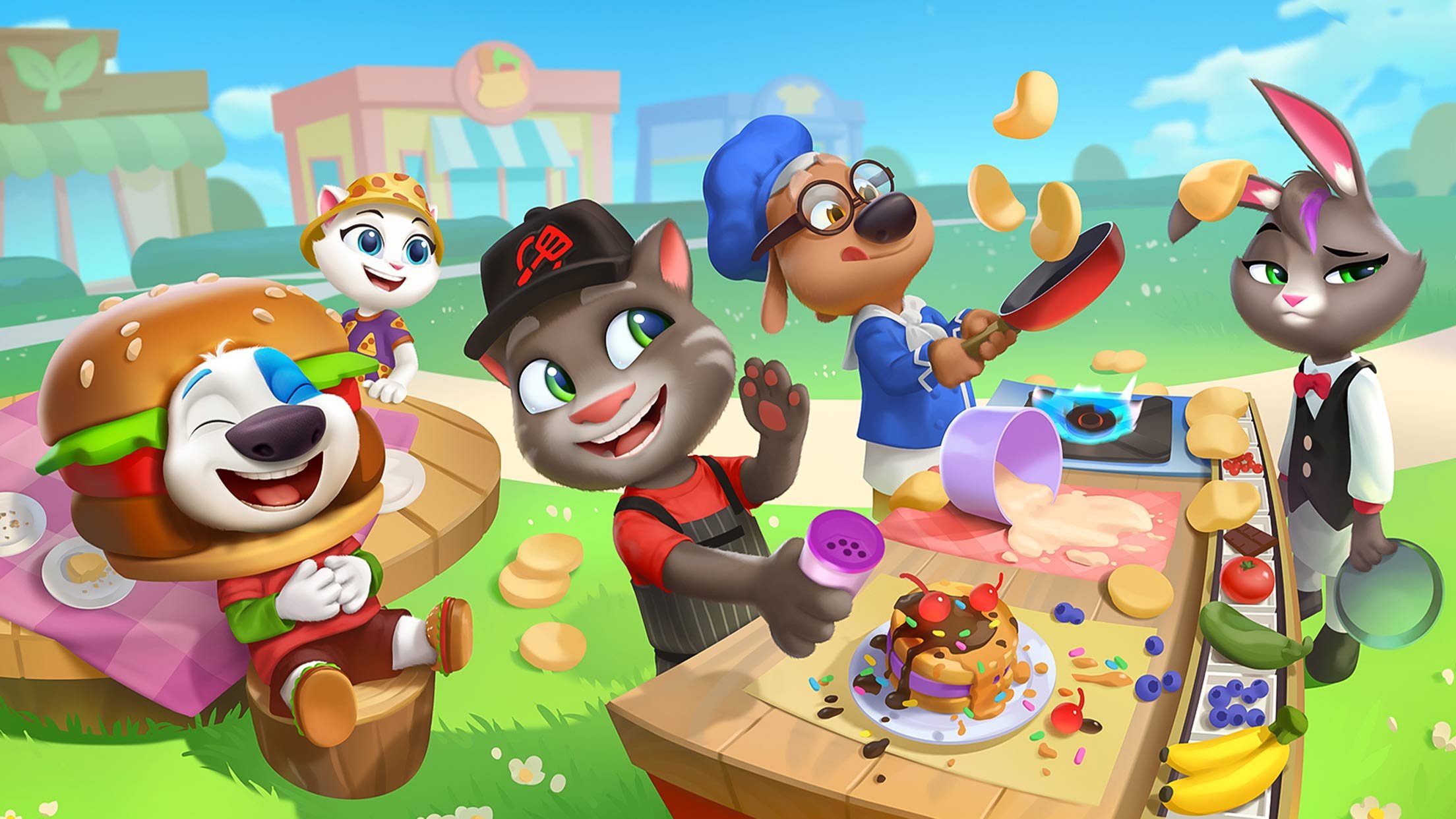
Explore casual mobile games built around shared neighborhoods, where multiple characters, mini-games, and locations create a world players can explore together.
Read more
Learn how casual mobile games combine mini-games, exploration, and shared environments to create varied gameplay that supports different skills and play styles.
Read more